Maintaining your lawn tractor's engine is crucial for its longevity and performance. A key aspect of this maintenance is ensuring the correct oil level. This guide provides a step-by-step approach to determining your lawn tractor's oil capacity and performing an oil change. For further information on lawn tractor maintenance, check out this helpful resource: lawn tractor maintenance.
Finding Your Lawn Tractor's Oil Capacity
The most reliable source for your lawn tractor's oil capacity is the owner's manual. This document, provided by the manufacturer, contains precise specifications tailored to your specific model. Why is this so important? Oil capacities vary significantly depending on engine size and model. Using the wrong amount can lead to engine damage.
How to Find the Information:
- Locate Your Owner's Manual: This is your primary resource. Carefully review the sections on maintenance and lubrication.
- Identify the Correct Specifications: Look for a table or section specifying oil type and capacity for your particular model or engine type.
- Engine Type Matters: Some manuals list specifications by engine type (e.g., Briggs & Stratton, Honda, Kohler). Ensure that you're using the correct information for your engine.
- Refer to Diagrams: The manual may include diagrams that visually point to the oil fill location and dipstick.
What if You Can't Find Your Manual?
Don't worry. There are several alternatives:
- Manufacturer's Website: Most manufacturers have online support sections where you can find manuals for download. You will typically need your model number.
- Online Forums: Online communities dedicated to lawn care and equipment often have experienced users who can provide guidelines for your specific model.
- Local Dealers: Your local lawn and garden equipment dealer can also assist you in finding the correct information.
Understanding Lawn Tractor Oil Types and Viscosities
Your owner's manual will also specify the appropriate oil type and viscosity. The viscosity is indicated by a designation like SAE 30, 10W-30, or 5W-30. These numbers refer to the oil’s thickness at different temperatures:
- SAE 30: A thicker oil, ideal for warmer climates.
- 10W-30, 5W-30: Multi-viscosity oils suitable for a wider range of temperatures.
Synthetic oils generally offer superior performance and longevity, but always adhere to the manufacturer's recommendations. Using the incorrect oil can cause serious engine damage.
Checking Your Oil Level
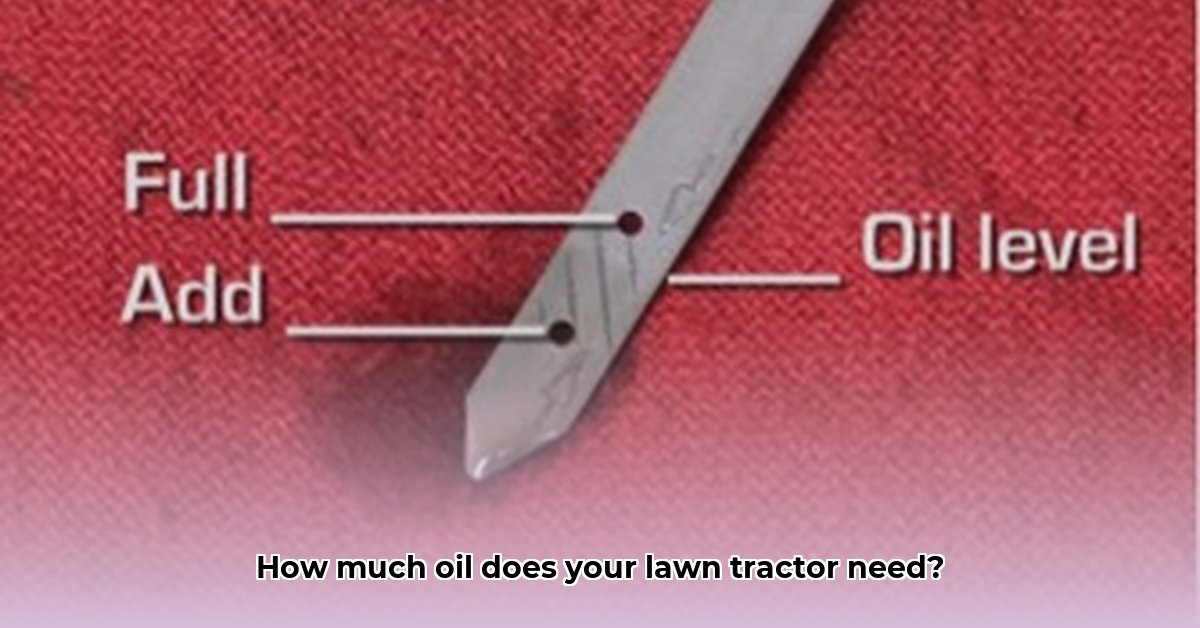
Before changing your oil, always check the current level using the dipstick:
- Locate the Dipstick: Typically brightly colored (yellow is common).
- Clean the Dipstick: Remove it, wipe it clean with a lint-free cloth, then reinsert it fully.
- Check the Level: Remove it again. The oil level should be between the minimum and maximum markings.
- Adjust as Needed: Add oil if low; if high, you might need to drain some (never overfill).
Performing a Lawn Tractor Oil Change: A Step-by-Step Guide
Changing your lawn tractor's oil is a straightforward process but requires care.
Important Safety Note: Always allow the engine to cool completely before starting this procedure. Hot oil can cause serious burns.
Materials Needed:
- Fresh oil (correct type and amount)
- New oil filter (if applicable)
- Wrench for drain plug
- Drain pan
- Funnel
Procedure:
- Place Drain Pan: Position the drain pan under the engine's drain plug.
- Remove the Drain Plug: Carefully remove the plug, allowing the old oil to drain completely. (This may take time).
- Replace Oil Filter (if applicable): Unscrew the old filter and install the new one, lightly lubricating its gasket for a proper seal.
- Replace Drain Plug: Securely tighten the drain plug, avoiding over-tightening.
- Add New Oil: Using a funnel, slowly add the correct amount of fresh oil.
- Recheck Oil Level: Use the dipstick to verify the level is correct.
- Dispose of Used Oil: Used motor oil is hazardous waste. Dispose of it properly at a designated recycling center or auto parts store.
How Often Should You Change Your Oil?
Consult your owner’s manual for the manufacturer's recommended oil change interval. This is typically measured in hours of operation or annually (whichever comes first). Frequent use may necessitate more frequent changes.
Regular oil changes are essential for maintaining your lawn tractor's engine and preventing costly repairs. By following these steps and adhering to the manufacturer's recommendations, you can ensure your lawn tractor continues to provide years of reliable service.